
Dental Implants
Turkey
Global Medical Care is an internationally recognised facilitation service connecting clients with partner dentists and clinics for dental implants in Turkey. We handle the coordination — so you can focus on your treatment journey.





Dental
Implants
Turkey


Global Medical Care is an internationally recognised facilitation service connecting clients with partner dentists and clinics for dental implants in Turkey. We handle the coordination — so you can focus on your treatment journey.

Dental Implants
Turkey
Dental Implants
Turkey
Request Free Consultation


























Dental Implants Turkey
dental
implants
in turkey

What Is a Dental Implant?
Dental implant surgery involves artificial structures designed to replace missing teeth. These implants consist of three main components. The first is the dental implant itself, typically made from titanium, which is surgically inserted into the jawbone to serve as a stable foundation for the replacement tooth. The second component is the abutment, which connects the implant to the crown and ensures secure fit and proper alignment. The third is the crown — the visible part of the implant, custom-made to match the colour, size, and shape of the client’s natural teeth. Dental implants aim to restore both the functionality and appearance of the smile. Individual results vary.
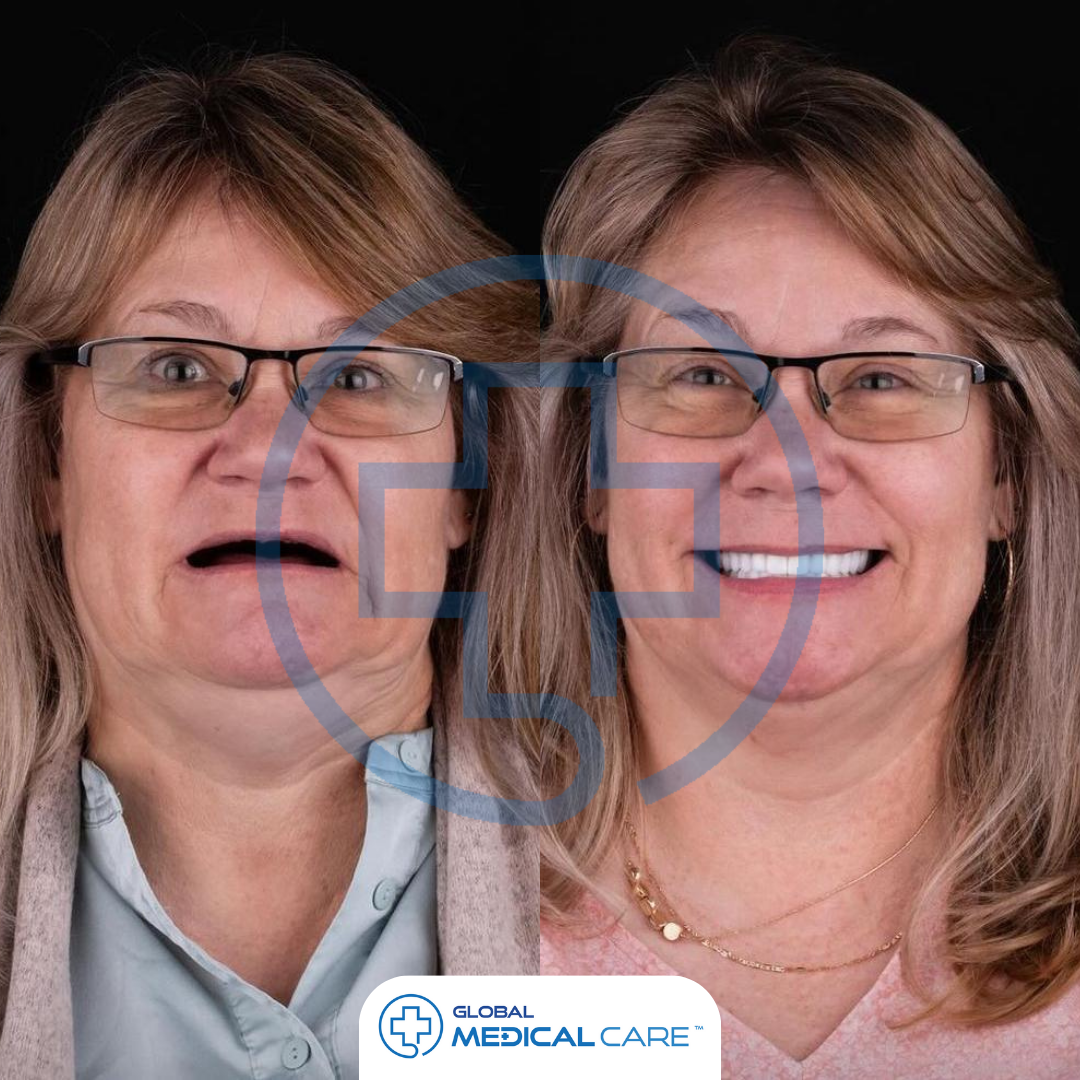
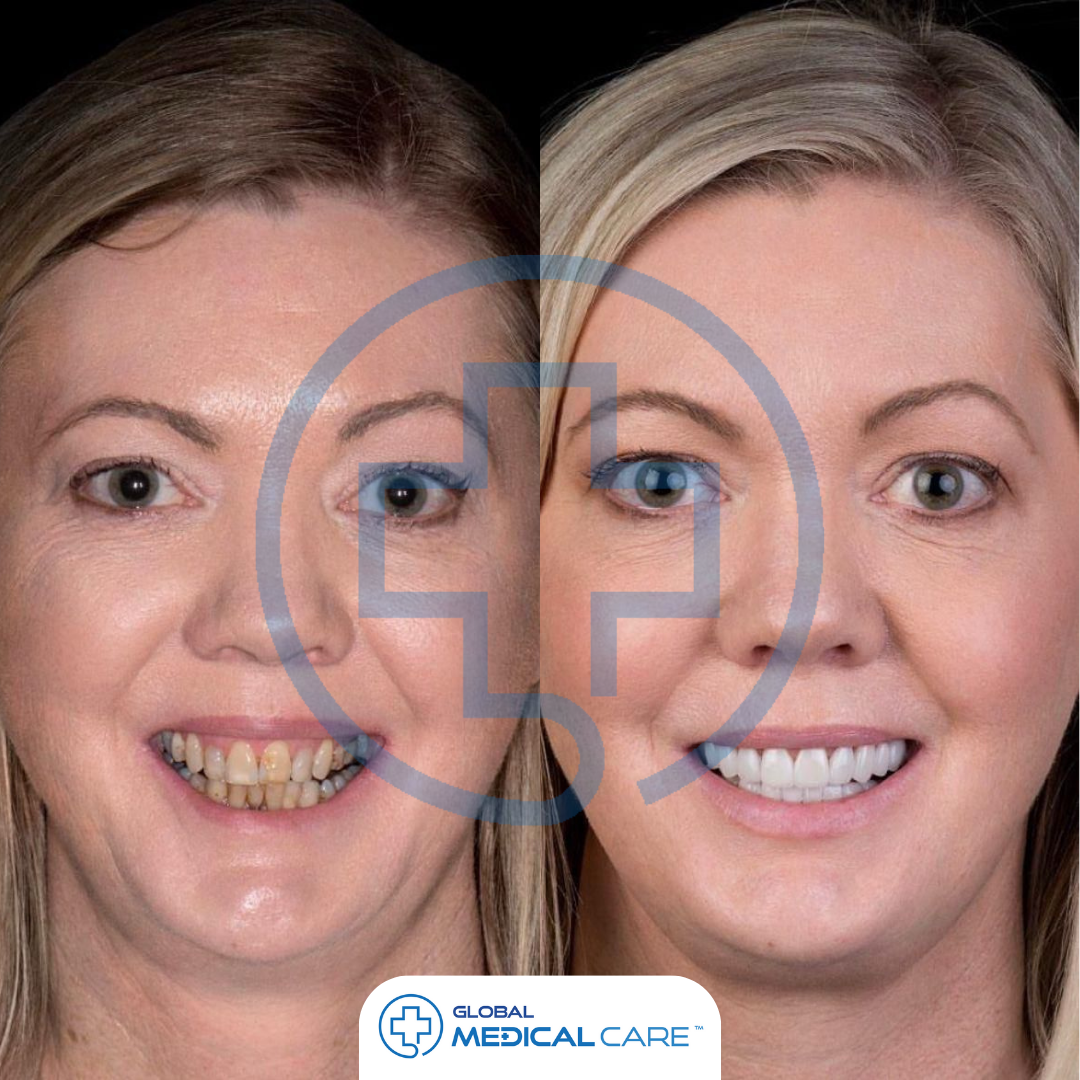
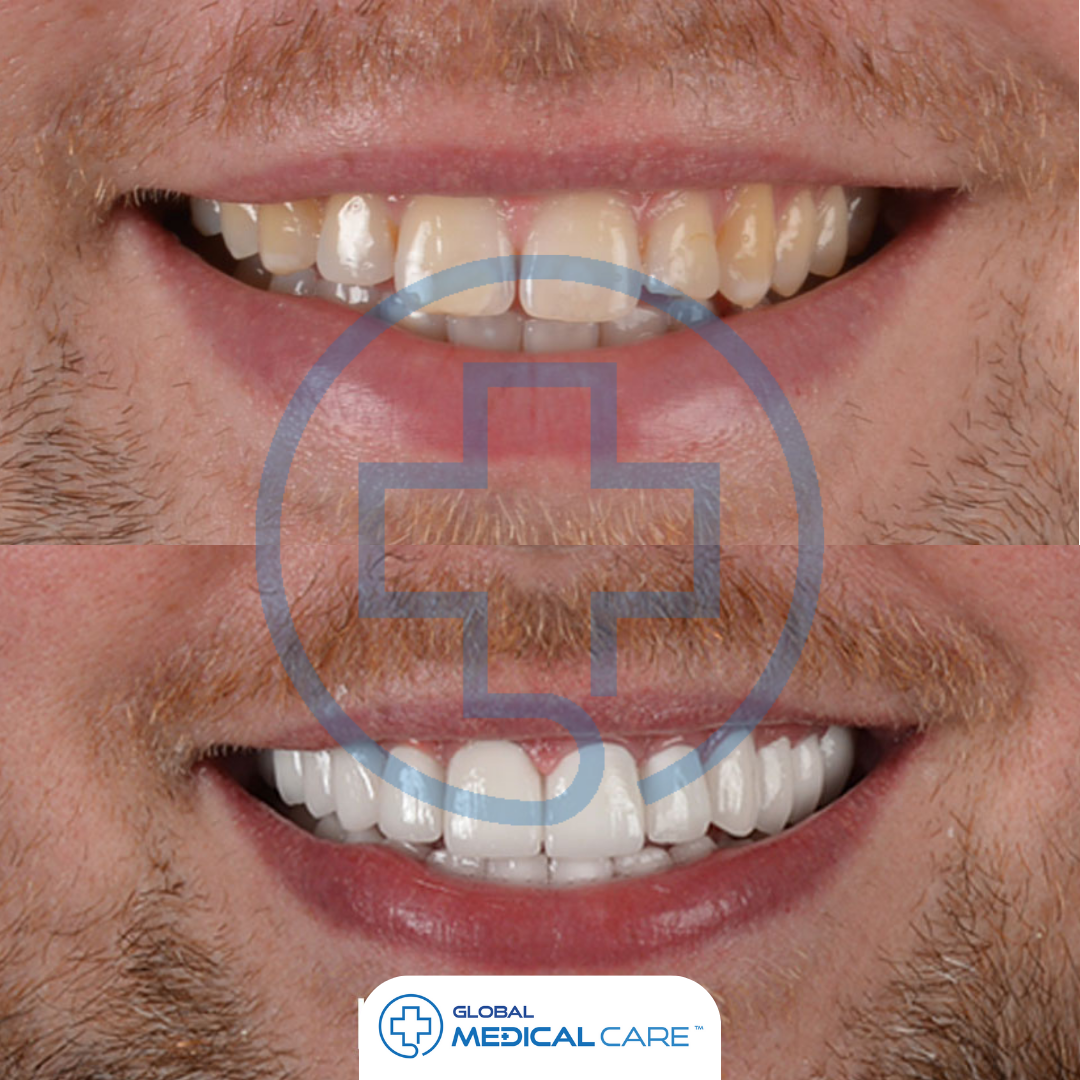
Dental Implants Before and After
Have a look at the before and after pictures of clients treated by our partner dentists in Turkey.
These images show results achieved by clients of our partner dentists. Individual results may vary depending on each client’s circumstances, health profile, and the procedures performed.






Why Choose GMCare for Dental Implants in Turkey?
Global Medical Care is a medical travel facilitation service connecting clients with a carefully selected network of partner dentists and dental clinics across Turkey. We coordinate every step of the process — from initial assessment through to aftercare support — so clients can focus on their treatment journey.
Our partner dental clinics comply with national health quality standards (i.e. SKS); if possible, hold international accreditation (e.g. JCI) and are equipped with modern dental infrastructure. Client experience is central to how we work, with dedicated patient coordinators providing personalised support throughout.
Multiple Offers to Choose from
Tailor your dental implant journey with a range of customisable facilitation packages designed to suit your individual needs and circumstances.
European Contract to Protect Your Rights
GMCare provides clients with a legally binding European facilitation contract, setting out the scope of services, responsibilities, and transparency commitments throughout your journey.
Competitive Pricing, Transparent Process
Access dental implants in Turkey through partner clinics that aim to offer strong value without compromising on the standard of facilities or dental expertise.
Advanced Partner Facilities
Our partner dental clinics are equipped with modern technologies and infrastructure, selected for their clinical capabilities and facility standards.
Types of Dental Implants
There are several types of dental implants, including endosteal implants, which are surgically placed into the jawbone and are the most commonly used type. Subperiosteal implants, placed on or above the jawbone, serve as an alternative for clients with insufficient bone height. Additionally, zygomatic implants are longer and anchor into the cheekbone, used for clients with severe bone loss in the upper jaw. Each type of dental implant offers different benefits depending on the client’s specific needs and bone structure.
Endosteal Implants
Endosteal implants are the most commonly used type of dental implant. They are surgically embedded into the jawbone, acting as a stable foundation for one or more artificial teeth. These implants are versatile and can support various dental restorations, including single crowns, bridges, and full dentures
Subperiosteal Implants
Subperiosteal dental implants are an alternative option for clients with limited jawbone height. Rather than being placed within the bone, these implants are positioned on top of the jawbone, beneath the gumline. They are custom-made to fit the shape of the jawbone and provide a stable base for the replacement teeth.
Dental Implants and Bone Graft Procedures
Dental implant surgery may require a bone graft procedure when the jawbone lacks sufficient density or volume to support implants. During a bone graft, bone material is added to the deficient area of the jawbone to promote new bone growth and improve its strength and density. This provides a more stable foundation for the implant. Bone grafts can be sourced from the client’s own body, a donor, or synthetic materials, with the specific approach determined by the individual’s clinical needs and circumstances.
Advantages of Dental Implants over Dentures
Natural and Comfortable
Dental implants are designed to look, feel, and function similarly to natural teeth. Individual experiences vary.
Documented Success Rates
Dental implants have well-documented clinical success rates when placed and maintained appropriately. Longevity is influenced by individual oral health, care habits, and clinical circumstances. Individual results vary.
Improved Chewing Function
Implants may support improved ability to bite and chew, which can allow clients to eat a wider range of foods. Individual results vary.
Preservation of Adjacent Teeth
Unlike bridges, which require adjacent teeth to be used as support, dental implants do not rely on neighbouring teeth for stability. This may reduce the risk of decay developing in nearby teeth. Individual results vary.
Maintenance of Jawbone
Implants stimulate the jawbone, which may help reduce bone loss and support the natural facial structure over time. Individual results vary.
Convenience
Unlike dentures, which require removal and daily cleaning, dental implants are a fixed restoration that form a permanent part of the mouth, reducing the need for daily maintenance routines.
Dental Bridge vs Implant
When considering tooth replacement options, it is important to weigh the considerations of each. While dental implants offer a range of clinical advantages, dental bridges may be a suitable alternative for certain individuals. Bridges are generally less expensive upfront, though they require the support of adjacent teeth and may place increased strain on those teeth over time. Bridges may also require replacement or repair, which can add to the overall cost. A dental implant does not rely on adjacent teeth for support, making it a more independent restoration option. Implant-supported bridges offer a hybrid approach, combining the stability of implants with the coverage of a traditional bridge. The most appropriate option depends on individual clinical circumstances and should be discussed with a partner dentist.
Implant Supported Fixed Prostheses
Dental Implants All On 4
All-on-4 dental implants involve the surgical placement of four dental implants in the upper and lower jaws. They provide a stable foundation for a full-arch prosthetic, designed to mimic the look and shape of natural teeth and gums. The procedure can typically be completed in a single day, with temporary dentures placed immediately and permanent dentures prepared within three to six months.

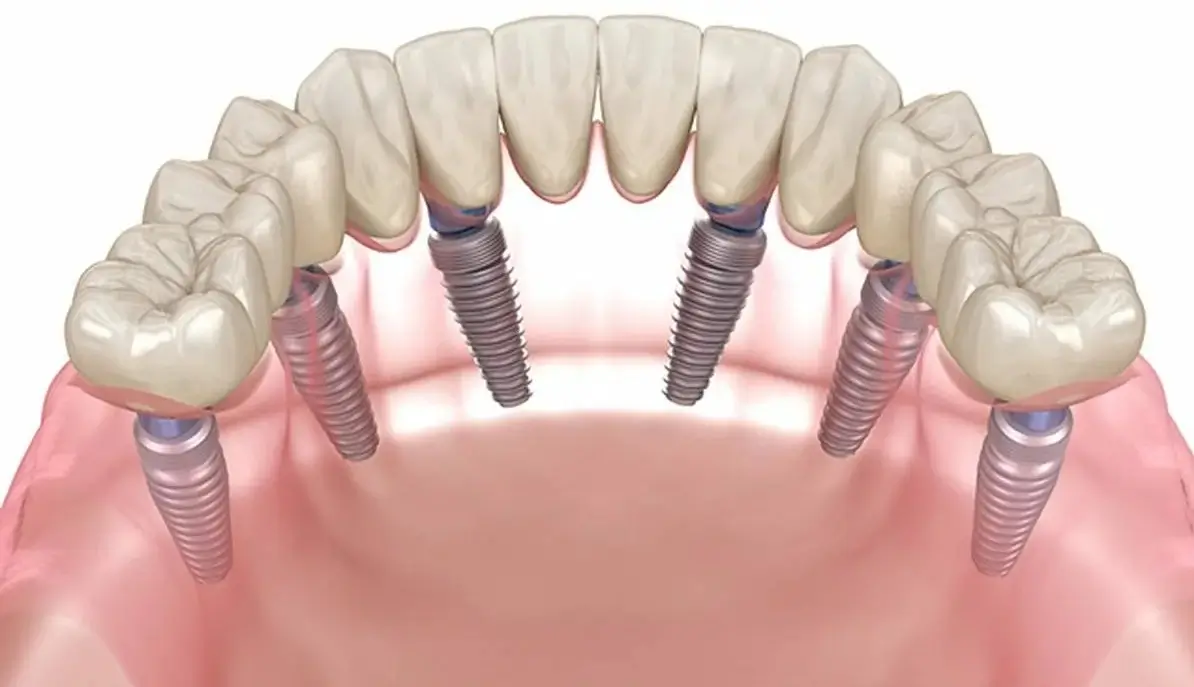
All On Six Dental Implants
All-on-6 involves the surgical placement of six dental implants in the upper and lower jaws. It offers the same principles as All-on-4, with the two additional implants providing extra stability and improved jaw support. This approach may be considered for clients who require greater structural support or who have reduced bone density. Individual suitability is subject to clinical assessment.
Have You Had Your Dental Analysis Done?
Our partner dentists will assess your individual circumstances, review your dental health profile, and determine which dental implant options may be suitable for you. GMCare also arranges the opportunity for clients to connect with their partner dentist prior to travel.

For more information about Gastric Balloon
Dental Implant Price in Turkey
Dental implant prices vary depending on the following factors:
- Accreditation and facilities of the partner clinic
- Implant type and brand
- Number of implants required
- Any additional treatments needed prior to the implant procedure
Please fill in the Free Consultation request form and your patient coordinator will provide you with options tailored to your circumstances within 24 hours.
Request Free Consultation
You will be contacted by one of our patient coordinators. Please send us details of your dental condition. There is no commitment at this stage.
Testimonials
See what people are saying.
The testimonials shared reflect the individual experiences of clients. Results and experiences vary. Global Medical Care is a facilitation intermediary and does not provide medical treatment directly.




FAQs
Dental implant surgery is usually in two stages. In the first stage, the implant is placed in the jawbone and the healing process is awaited. Then, a prosthetic tooth is placed on the implant.
Generally, no pain is felt during dental implant surgery using local anesthesia. There may be mild pain and swelling after the procedure, but these effects are usually short-term and manageable.
Dental implants can be long-lasting when properly cared for. Good oral hygiene, regular dental care, and periodic check-ups can increase the durability of implants.
In general, people with a healthy mouth and jawbone structure can be candidates for dental implants. However, some health conditions, factors such as smoking or jawbone insufficiency may make implant application difficult.
Yes, dental implants usually feel similar to natural teeth. They behave like other teeth in chewing, speaking and daily activities.
As with any surgical procedure, dental implant surgery involves certain risks. Complications such as infection, rejection of the implant, or damage to the jawbone are rare but possible.
Dental implant treatment can vary from person to person, but usually, the implant placement process can take several months. During this time, the jawbone is expected to heal.
The quality and quantity of available bone is an important factor in dental implant suitability. Where bone volume is insufficient, a bone augmentation procedure may be required around the implant site. Depending on the extent of the deficiency, this can often be carried out at the same time as implant placement. Your partner surgeon will assess your bone structure and advise on the appropriate approach.
Dental implants require the same level of care as natural teeth. Brushing twice daily, flossing, and attending regular hygiene appointments will help maintain implant health. Particular attention should be paid to the implant sites. An annual implant review with your partner dentist is recommended to monitor bone quality and gum health around the implant area.
Each case varies regarding how many implants are needed for the demands of replacing the missing teeth. If the implant surgeon is limited regarding the length of implants that can be placed, more implants will be needed. The length of the implants is determined by how much bone you have present. The number of implants is also dependent on the final restoration that is required and the number of teeth that are to be replaced.
When a tooth is lost and not replaced, the bone that was supporting the tooth no longer has a reason to be there, so it will begin to erode. This can cause bone loss around the surrounding teeth and can lead to damaging and losing surrounding teeth, which may ultimately lead to the eventual loss of other teeth. Although dental implant procedures involve multiple steps, replacing just one missing tooth can not only sometimes be done in one day, but it can also help save the other, currently unaffected teeth from future damage.
As with any surgical procedure, dental implant surgery carries certain risks. These include infection, implant rejection, or damage to the surrounding bone. Your partner surgeon will discuss your individual risk profile during the pre-operative consultation. Clients are encouraged to seek independent medical advice before proceeding.
